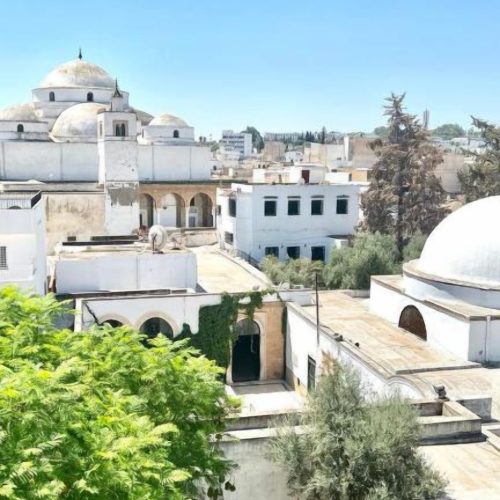
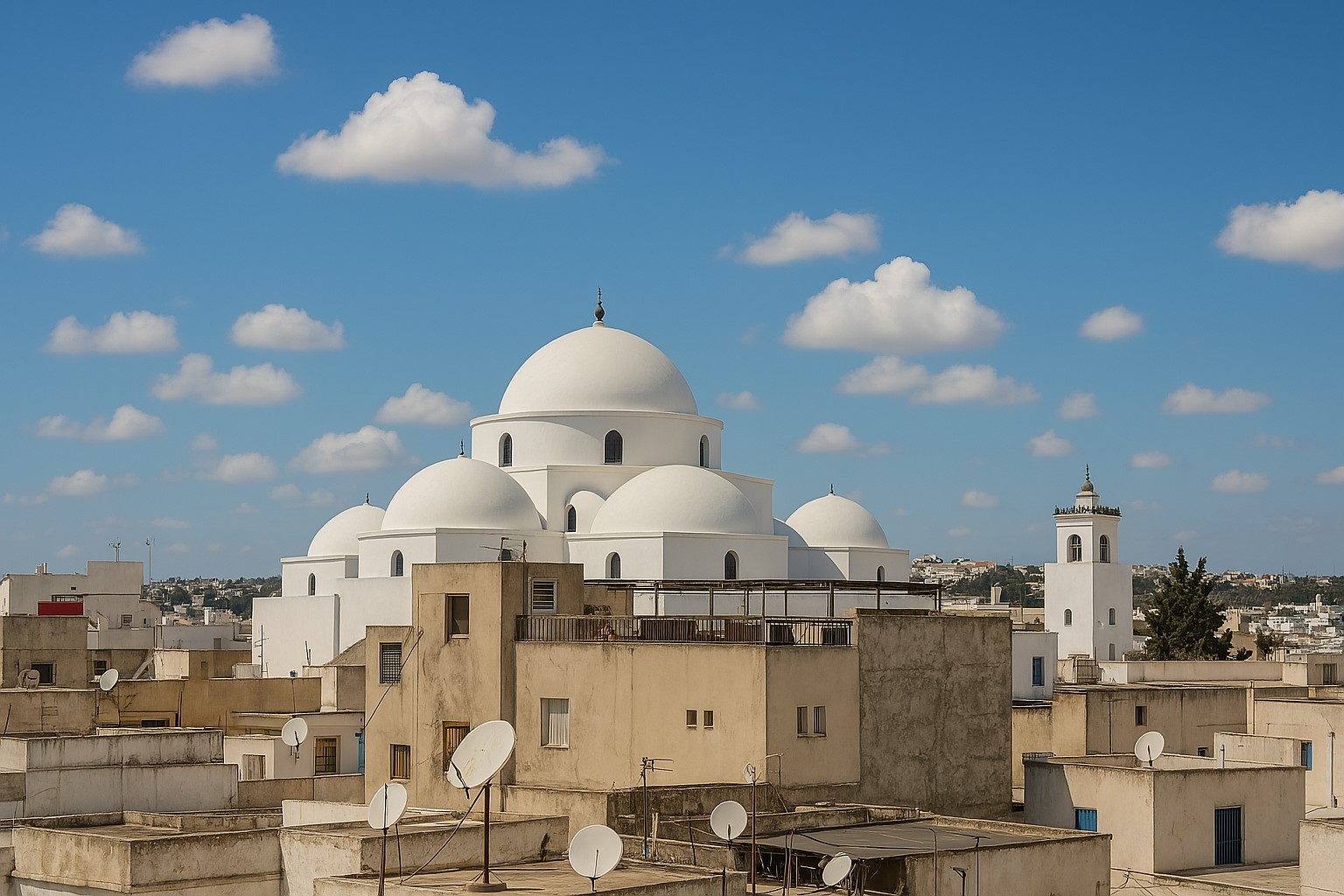
Before the eleventh century, Jews were not permitted to live within the walled city of Tunis. Jews lived instead in the fondouk of Bab el-Bhar. Sidi Mahrez Ibn Khalef, a marabout (scholar of the Koran) known as Sultan al-Medina (patron and protector of Tunis), was credited with protecting Tunis against political upheaval at the end of the Fatimid dynasty. He was also a protector of minority groups that included Jews, black slaves and the bataniya (foreign migrants). One day, at the end of the tenth century, Sidi Mahrez stood looking at the city from the tower of the mosque that today bears his name. He repeatedly threw his staff from the top of the minaret and all areas that fell within Sidi Mahrez’s throwing distance – within the northeast part of the Medina of Tunis – would be set aside for Jews to settle. From this point on, Jews could live within the walled city of Tunis and were permitted to build houses and synagogues. This area of the Medina was known as the Hara (the quarter). Until the arrival of the French in 1881, Jews had lived in the Hara for almost 800 years. In popular imagination the Hara is represented as a site of poverty; of windy dirt-filled narrow streets, wheresqualor and despair reigned.The Grande Synagogue of the Hara was located on the corner of the rue de la Synagogue and la rue du Bain. It was demolished in 1961.